Facts checked 2026-11-15.
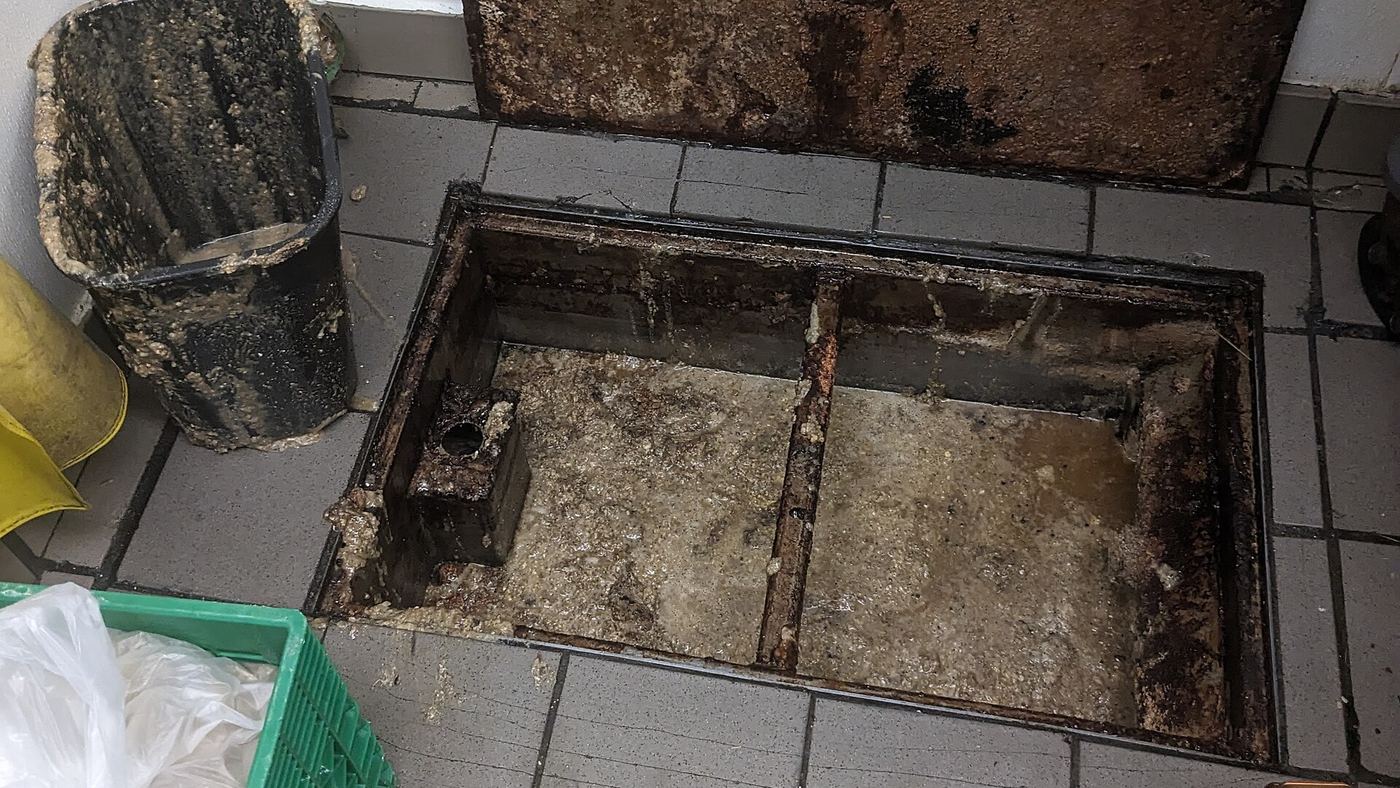

Your city or its wastewater utility decides how a grease trap is built and how often it is pumped. The state agency, the Texas Commission on Environmental Quality (TCEQ), regulates the haulers. Texas Commercial Kitchen Connect passes your request to haulers that cover your ZIP code. The hauler does the pumping, and we check the registration where the law requires one.
City rules, state haulers
Per TCEQ, installation falls under local ordinances, the wastewater utility, or both. A trap is required wherever a business sends cooking grease to the sewer and the area has a plumbing code. The state keeps no register of traps, though a city may.
At the state level, TCEQ rules cover pumping, transport and disposal of the waste. It has no say over what a hauler charges.
The 90-day rule and the 25% rule
TCEQ publishes a model standard for cities to adopt. It wants the trap emptied completely every 90 days at most, and earlier when grease, sediment or floating material reaches 25% of the wetted height. A city can allow longer, though never beyond 180 days.
In Houston, interceptors are emptied each quarter unless a waiver is approved. A Dallas poster without a date repeats the 90 days and the 25% test. Treat both as a starting point and confirm the current rule with the city.
Get prices for this job. Send one request and pick how many local companies quote it.
Get quotesSigns a trap is due
- slow drains in the dish area or prep sinks
- a sour odor near the floor drain
- grease visible at the inlet
- a backup when the dish machine drains
Registered haulers only
Only a hauler registered with TCEQ may pump and move this waste. To check one:
- Request the hauler's TCEQ registration notice.
- Check the truck door for a current authorization sticker.
- Or search TCEQ's Sludge Transporter Query, or phone 512-239-6413.
A trap larger than the truck's tank means the hauler must bring more capacity and finish within 24 hours.
The manifest
Each visit produces a trip ticket, also called a manifest. It records you as the generator, the trap's size, the quantity pumped, when it happened, the hauler's registration number and where the waste went. You remain responsible, TCEQ notes, until the waste arrives at a proper disposal site. The TCEQ model and Houston say keep manifests five years, while Dallas's poster says three.
Houston and Dallas
Houston restaurants hold a Special Waste Generator permit from the Health Department, and inspectors arrive unannounced. Citations range from $250 to $2,000 per violation. Dallas Water Utilities permits haulers under city code chapter 19, article X. A Dallas hauler needs the TCEQ registration first, then a city permit for each truck.
Questions to ask
- Is the registration current, and does the truck carry the sticker?
- For a Dallas kitchen, does the hauler hold the city permit?
- Where is the waste taken?
- Will you get a fully signed manifest copy?
Questions
How often must a Texas restaurant pump its grease trap?
The TCEQ model says every 90 days or at 25% full. Houston and Dallas follow the 90-day interval, and your city sets the rule where you are.
Does a grease trap hauler need a state registration?
Yes. Only a TCEQ-registered hauler may legally pump and transport the waste.
Can a restaurant clean its own grease trap in Texas?
Only if the city allows it. The TCEQ model permits it with city approval for traps of 50 gallons or less inside a building.